𝐖𝐡𝐲 𝐀𝐥𝐥 𝐓𝐡𝐢𝐬 “𝐓𝐞𝐬𝐭𝐢𝐧𝐠” 𝐀𝐜𝐭𝐮𝐚𝐥𝐥𝐲 𝐌𝐚𝐭𝐭𝐞𝐫𝐬 (and what it means in normal-person words)
People see the phrase “health tested” and assume it’s something a vet can do in a quick office visit.
But true health testing is far beyond a checkup.
Behind that phrase is:
• Thousands of dollars
• Hard choices
• Knowledge
• Planning
• And a whole lot of protecting future puppies
Here’s what all that testing REALLY means in our program
𝟏. 𝐖𝐡𝐲 𝐎𝐅𝐀 𝐓𝐞𝐬𝐭𝐢𝐧𝐠 𝐌𝐚𝐭𝐭𝐞𝐫𝐬
OFA isn’t a “stamp.”
It’s how we screen for structural issues that cause pain, mobility problems, and arthritis later in life.
In our program, we test:
• Hips (hip dysplasia)
• Elbows (elbow dysplasia)
• Patellas (luxating knees)
• Cardiac (heart conditions)
• Eyes / CAER (inherited eye disease)
A dog can look perfectly healthy and athletic in their younger years and still fail OFA.
Breeding without OFAs risks:
• Dogs living in pain far too young
• Families facing expensive surgeries and long-term meds
• Puppies unable to live the active life their people envisioned
OFA isn’t being “extra.”
It’s preventing avoidable suffering plain and simple.
𝟐. 𝐖𝐡𝐲 𝐆𝐞𝐧𝐞𝐭𝐢𝐜 𝐓𝐞𝐬𝐭𝐢𝐧𝐠 𝐌𝐚𝐭𝐭𝐞𝐫𝐬
Genetic testing looks inside the dog at things you can’t see on the outside.
Most inherited conditions are recessive, meaning:
• Clear = no mutation
• Carrier = one copy, healthy but can pass it on
• Affected = two copies, at risk for disease
If you breed Carrier × Carrier, you risk:
• 25% affected puppies
• 50% carriers
• 25% clear
That “25% affected” isn’t just a statistic
it can mean a puppy who slowly goes blind, loses mobility, or lives with chronic pain.
In our program:
• Carrier × Clear = fine
• Carrier × Carrier = absolutely not
Genetic testing allows us to prevent what we can prevent.
𝟑. 𝐅𝐮𝐫𝐧𝐢𝐬𝐡𝐢𝐧𝐠𝐬 & 𝐈𝐂 (𝐓𝐡𝐞 “𝐃𝐨𝐨𝐝𝐥𝐞 𝐋𝐨𝐨𝐤”)
This gene controls the classic doodle look:
• Teddy-bear face
• Brows
• Beards
• Overall “fluff factor”
Here’s what the results mean:
• F/F- strong furnishings, the full doodle look
• F/IC- furnished, but sometimes slightly less full
• IC/IC- improper coat, flat/retriever-like look
None of these are “bad,” but in our program we intentionally breed furnished coats to maintain consistency in the doodle appearance.
𝟒. 𝐓𝐡𝐞 𝐒𝐡𝐞𝐝𝐝𝐢𝐧𝐠 𝐆𝐞𝐧𝐞 (𝐌𝐂𝟓𝐑)
(based on Embark + UC Davis VGL)
This gene helps predict shedding:
• TT- lowest/light shedding
• CT- moderate shedding
• CC- heavier shedding
Coat isn’t just about shedding curl length also matters:
• CC = straight (-/-)
• CT = wavy (-/+)
• TT = curly (+/+)
And here’s where many people get confused:
A dog can be F/F (fully furnished) AND still have a straight coat
straight does NOT automatically mean “improper coat.”
Personally, straight and wavy coats are my favorite for families:
they are often easier to brush, maintain, and keep healthy long-term.
Planning coats isn’t about choosing the “cutest.”
It’s about:
• Helping allergy-sensitive families avoid a bad match
• Setting realistic grooming expectations
• Matching coat type to lifestyle and ability
𝟓. 𝐖𝐡𝐲 𝐈’𝐦 𝐓𝐡𝐢𝐬 𝐏𝐢𝐜𝐤𝐲
Some people think all this testing is “extra.”
But to me?
It’s the bare minimum.
These decisions shape:
• A dog’s long-term comfort
• A family’s experience raising that dog
• The future and reputation of doodles as a whole
I don’t test to say I tested.
I test so I can use the results:
• To avoid risky pairings
• To produce consistent coats and temperaments
• To protect my dogs and my families
• To build healthier generations
This isn’t “just putting two dogs together.”
It’s science.
It’s education.
It’s intention.
It’s heart.
And yes a whole lot of prayer, too.
If you’ve ever wondered why ethical breeders charge what they do,
This is a huge part of the why.
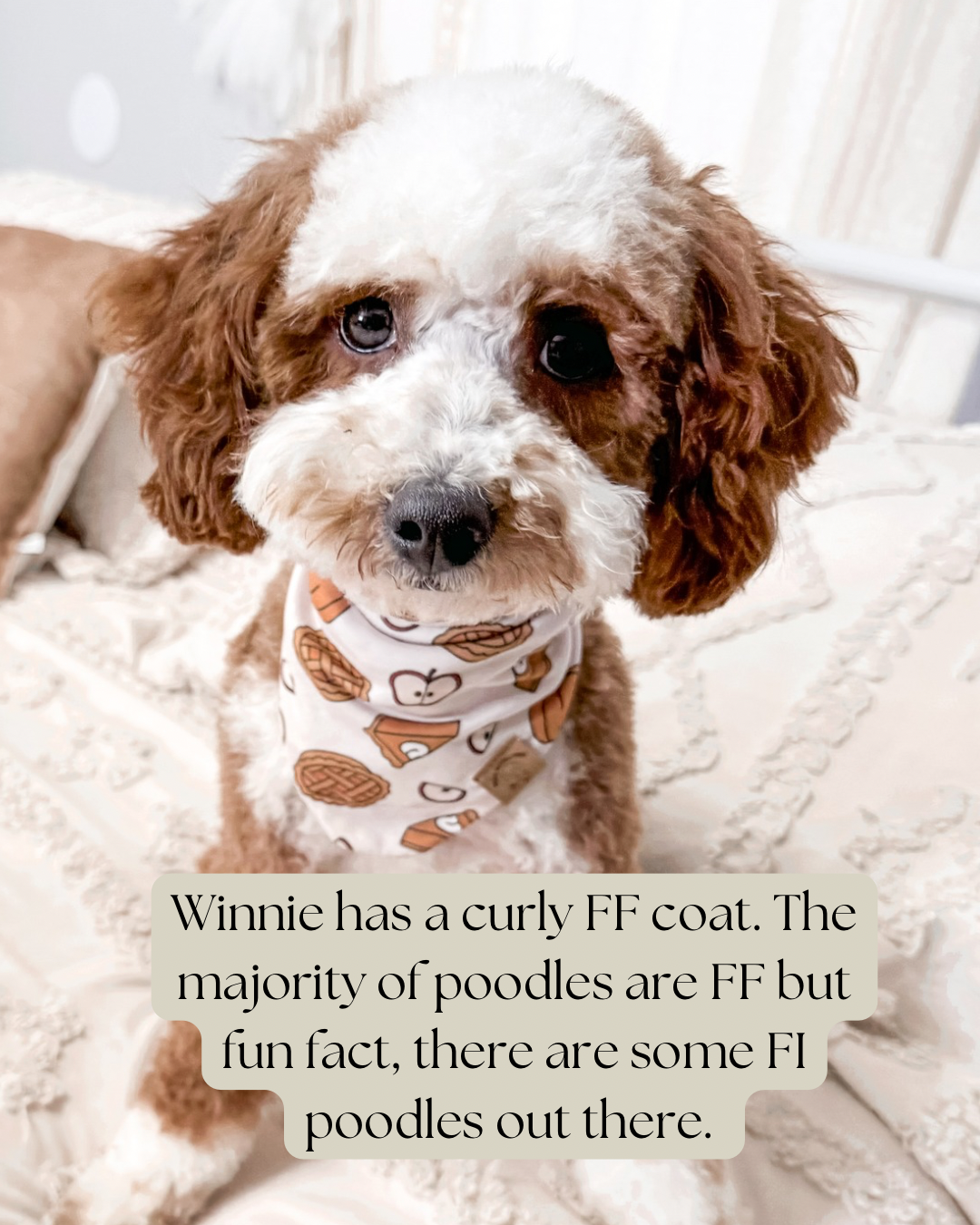
To help you understand the differences, I’ve included photos of our own dogs below showcasing curl types and coat types- including F/F, F/IC, IC, and the variations of wavy ,curly coats.